



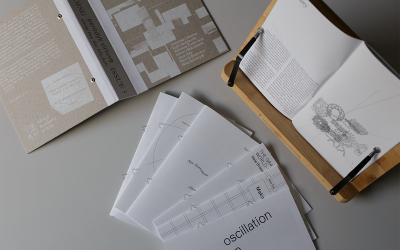

17th April at 2 p.m. Simona Rukuižaitė, a doctoral student in Fine Arts, will defend the art project „Stone and Water. Geological Approaches to Ochres in Artistic Practice“ (Fine Arts V 002) at Vilnius Graphics Art Centre, gallery „Kairė–dešinė“ (Latako str. 3, Vilnius).
The dissertation defence meeting will be held in Lithuanian.
Art project supervision:
Assoc. Prof. Eglė Ridikaitė (2023-2025)(Vilnius Academy of Arts, Visual Arts, Fine Arts V 002),
Prof. Dr. Žygimantas Augustinas (2021-2023)(Vilnius Academy of Arts, Visual Arts, Fine Arts V 002).
Thesis supervision:
Dr. Tojana Račiūnaitė (Vilnius Academy of Arts, Humanities, Art History and Theory H 003).
Art project consultant:
Prof. emeritus, Dr. Gediminas Motuza-Matuzevičius (Vilnius University, Natural Sciences, Geology N 005).
The Artistic Research Project will be defended at a public meeting of the Academic Board of Fine Arts at Vilnius Academy of Arts composed of the following members:
Chairperson:
Prof. Severija Inčirauskaitė-Kriaunevičienė (Vilnius Academy of Arts, Visual Arts, Fine Arts V 002).
Members:
Dr. Nina Liebenberg (University of the Arts of Helsinki (Finland), Visual Arts, Fine Arts V 002),
Prof. Dr. Giedrė Mickūnaitė (Vilnius Academy of Arts, Humanities, Art History and Theory H 003),
Dr. Jūratė Senvaitienė (Pranas Gudynas Conservation Centre of the National Museum of Lithuania, Natural Sciences, Chemistry N 003),
Assoc. Prof. Dr. Julijonas Urbonas (Vilnius Academy of Arts, Visual Arts, Fine Arts V 002).
Abstract
How can we approach a material whose history predates human experience? How can artistic practice become a way to pose questions about the origins and meanings of an object? Navigating between the fields of art and science – site-specific art, geology, and field research – I explore the history of ochre, its diversity of forms and transformation into colour.
Stone and Water is a practice-based research project where knowledge emerges through the interplay of materials and their contexts, and through relationships with time and memory. A geological gaze intertwines with a poetic, sensory approach, allowing matter to be considered as active and constantly changing. Ochre is perceived not only as a colour or a painting material, but also as a fragment of earth’s history, holding within it the processes of deep time and the echoes of cultural memory.
Throughout this process, I adopt various roles, each enriching my experience of ochre and helping to unlock its meanings: whether examining dusty collections in the winding corridors of a geology lab, patiently grinding it into pigment, or walking along the bed of a long-dried river, where I spot a patch of ochre jutting from the slope.
__________
Image: In the Belly of the Ochre Massif. Image by Simona Rukuižaitė. 2024