



24th April at 2 p.m. Marta Frėjutė, a doctoral student in Fine Arts, will defend the art project „Civilisation Series“ (Fine Arts V 002) at gallery Meno Parkas (Rotušės a. 27, Kaunas).
The dissertation defence meeting will be held in Lithuanian.
Artistic Supervisor:
Prof. Deimantas Narkevičius (Vilnius Academy of Arts, Visual Arts, Fine Arts V 002).
Research Supervisor:
Dr. Tojana Račiūnaitė (Vilnius Academy of Arts, Humanities, Art History and Theory H 003).
Research advisor:
Prof. Dr. Eglė Rindzevičiūtė (Kingston University London (UK), Humanities, Culture Studies)
The Artistic Research Project will be defended at a public meeting of the Academic Board of Fine Arts at Vilnius Academy of Arts composed of the following members:
Chairperson:
Prof. Dr. Žygimantas Augustinas (Vilnius Academy of Arts, Visual Arts, Fine Arts V 002).
Members:
Anders Kreuger (Director, Kohta kuntsthalle (Finland), Visual Arts, Fine Arts V 002),
Raimundas Malašauskas (Curator, Visual Arts, Fine Arts V 002),
Dr. Lina Michelkevičė (Vilnius Academy of Arts, Humanities, Art History and Theory H 003),
Dr. Skaidra Trilupaitytė (Lithuanian Culture Research Institute, Humanities, Art History and Theory H 003)
Abstract
It is often claimed that the trade in cultural artifacts is the third-largest illegal industry after drug trafficking and arms smuggling, and that auctions of such objects in the West frequently adopt a lenient attitude toward provenance. Why are objects—especially old ones—so important to us? Why don’t we simply sweep up and discard a broken 17th-century ceramic vase?
This research, developed as a screenplay for a documentary series about the history of humanity, explores what accompanies human beings in the process of civilisation, what lies beneath its representational forms, and what sustains its structures. It also examines how we perceive culture and art, along with the emotions that shape this perception—euphoria, pride, fear of selfdestruction, and curiosity.
The project draws on personal experiences in museums, archaeology, and archival materials, all of which reveal the fragmented and interpretive nature of history. At its core is an investigation of materiality—layered inconsistencies, errors, and disruptions within materials. The project, together with the artworks it comprises, seeks to reconstruct the underlying logic of objects and the systems that govern their production.
The dissertation argues that the past is constantly reinterpreted through our material relationships with the environment, objects, and cultural contexts. Art is understood here as a unique means of questioning dominant narratives of civilisation and of reassembling fragments of history into open, multivalent meanings—a way of expressing something about humanity that history alone cannot convey.
__________
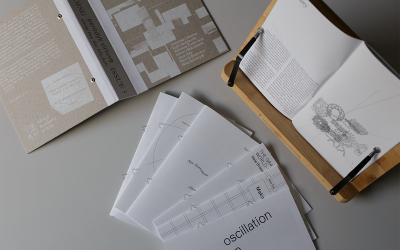
Illustration: Vase reconstruction, National Museum of Lithuania, analogue photography, 2026