

Doctoral studies
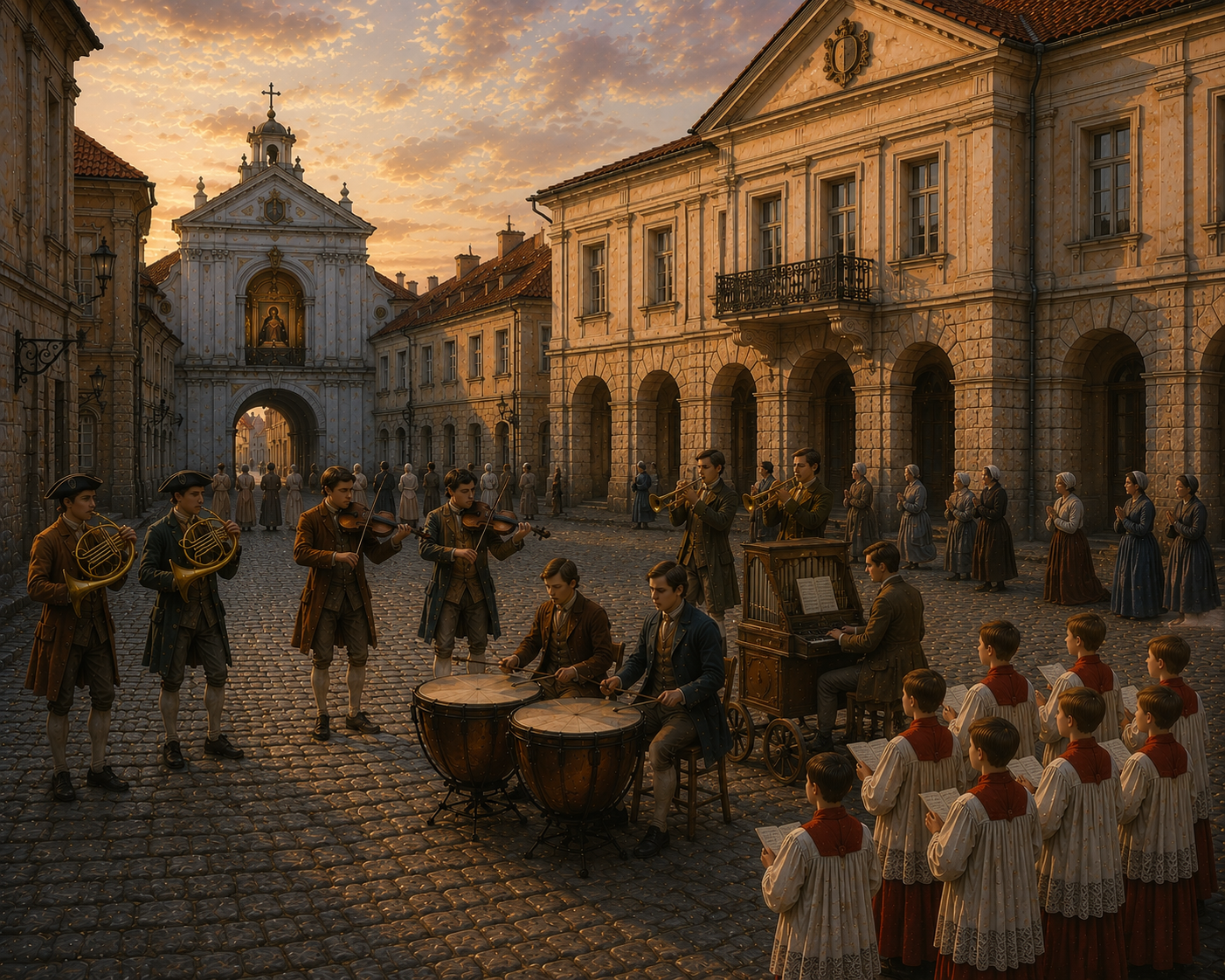
Alicja Dacevič (LKTI)18th June 2026 „The Chapels of Catholic Monastic Orders in Vilnius from 1617 to 1864: An Aspect of the Urban Soundscape“ Supervisor prof. dr. Laima Budzinauskienė
Source of the illustration: created using ChatGPT (June 4, 2026). Dissertation
|
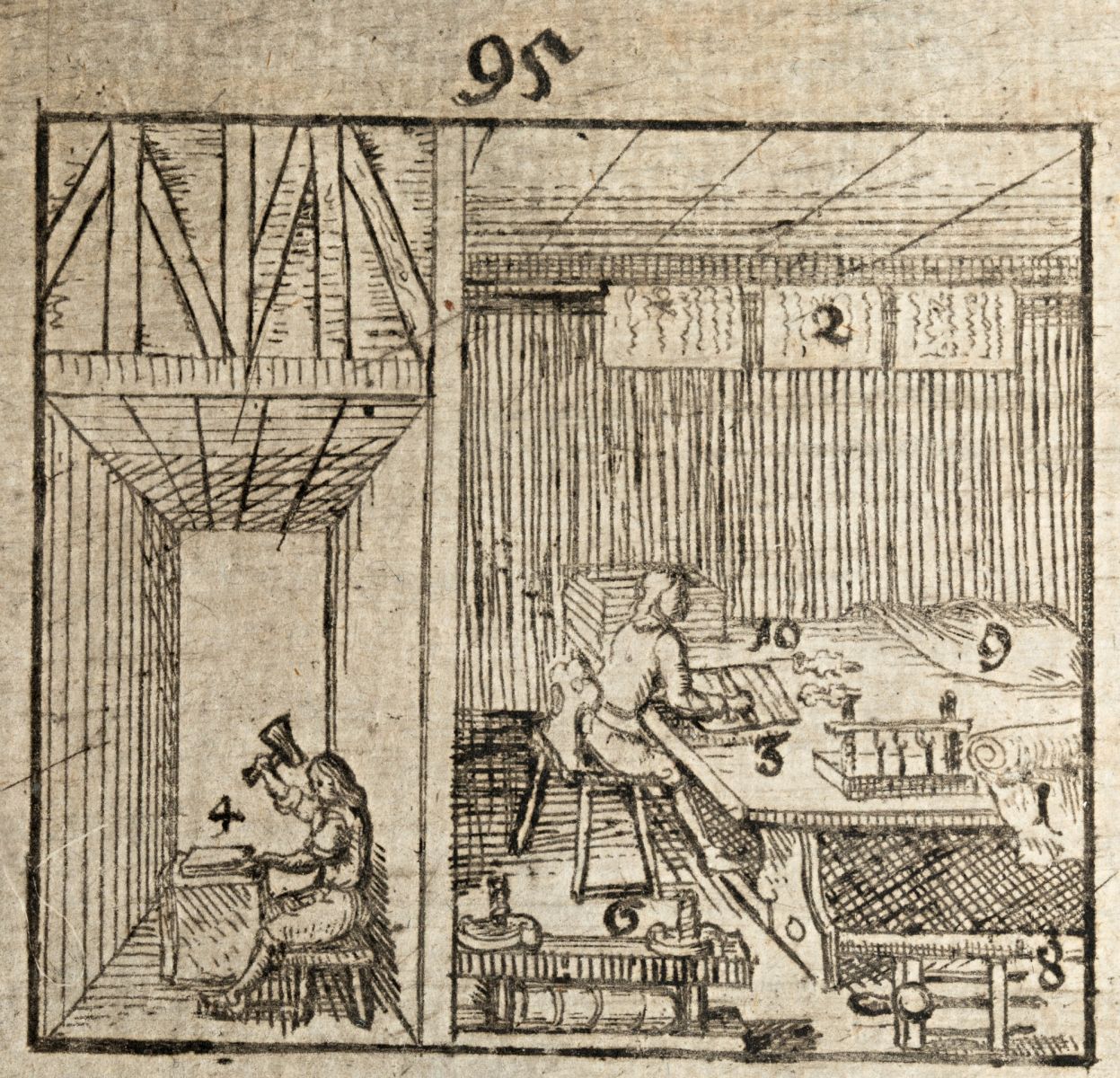
Ieva Rusteikaitė (VDA)29th May 2026 „The Book as an Artefact: Binding Techniques and Decoration of the Vilnius School to the Mid-17th Century“ Supervisor dr. Jolita Liškevičienė
Illustration: 16th–17th century bookbinder’s workshop, from Jan Amos Comenius, Orbis Sensualium Pictus (Brzeg: Christoph Tschorn, Kaspar Müller, 1667), pp. 234–235 © Vilnius University Library. Dissertation examines the development of bookbinding in the Grand Duchy of Lithuania from the second half of the sixteenth century to the mid-seventeenth century, with particular attention to the bookbinding school that emerged in Vilnius. The research is based on the analysis of written sources and surviving artefacts, namely the bindings of books that circulated within the region. Using a structured descriptive model, the study systematically investigates the structural, material, and decorative features of the bindings. The findings reveal new evidence on the technological diversity of local bindings and the presence of imported artefacts. The study shows that bindings associated with the Vilnius school belong to a broader Northern and Central European tradition, while also displaying distinctive local characteristics. The analysis of one of the largest collections of books printed in the sixteenth and seventeenth centuries in the region, formerly owned by the Vilnius Jesuit Academy Library, provides new insights into early modern practices of book circulation and use. The dissertation contributes to a deeper understanding of printing, book distribution, and craft of bookbinding in this period and proposes a methodological framework for further research. Dissertation
|
Vaidas Jauniškis (LMTA)10th March 2026 „The (A)political Body of the Theatre: Sociocultural Aspectsof 21st-Century Lithuanian Performing Arts“ Supervisor Prof. Dr. Ramunė Marcinkevičiūtė
|
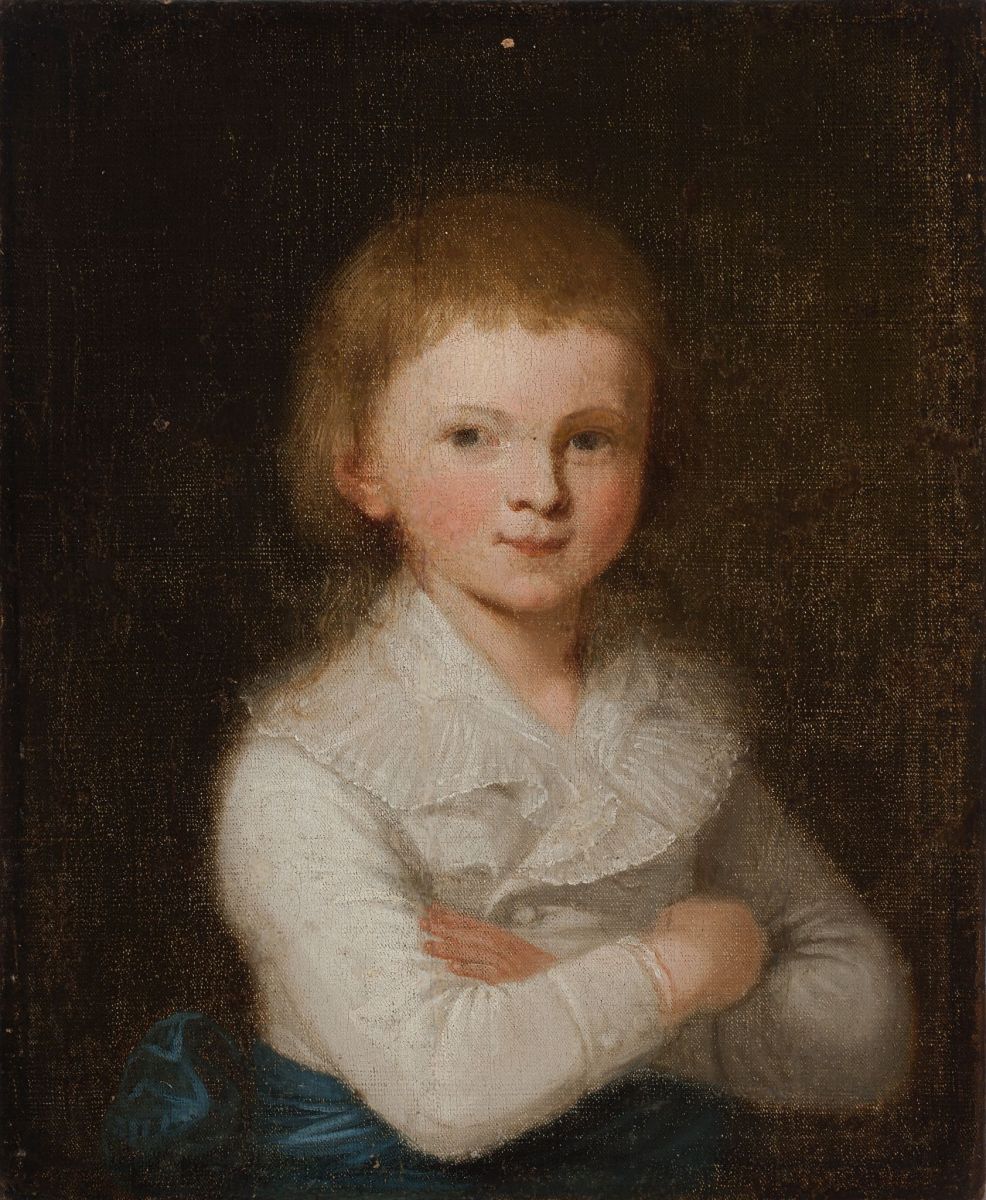
Joana Vitkutė (VDA)5th February 2026 „The Expression of the Concept of Childhood in Lithuanian Art from the Mid-18th to the First Half of the 19th Century“ Supervisor Dr. Aistė Paliušytė-Lugovojienė
Unknown artist, Portrait of a Boy, 1798, oil on canvas. During the Late Renaissance and Baroque periods, the conventions characteristic of classical old children’s portraiture became established in official representations of children, which largely followed the compositional schemes of adult portraits. Such works primarily served to reinforce family status and embody the expectations placed upon the child. Consequently, little room was left in these portraits for the expression of individuality – let alone the childishness – of the young sitter, who was often depicted as a miniature adult or even artificially ‘aged’ by the artist. As in the real lives of children at the time, childhood itself was often ‘accelerated’ or deliberately concealed. Thus, in portraits of noble offspring, one can sense a clear tension where a child’s inherent childishness clashes with the adult role prematurely imposed upon them. Nevertheless, significant changes emerged in children’s portraiture from the mid-18th to the first half of the 19th century, reflecting broader shifts in the perception of childhood. Under the influence of Enlightenment thinkers, and later of the worldviews of pre-Romanticism and Romanticism, childhood came to be defined – and soon also established in theoretical thought –as one of the most important, valuable, and unique stages of human life, worthy of considerable and special attention. As a result, artists increasingly sought to capture natural, childlike qualities in their subjects, emphasising the innate innocence of childhood. In other words, both in public life and art, the child gradually became a child, i.e. the way we perceive them today. The aim of the dissertation is to problematise artistic Lithuanian studies of childhood –which until now have been based primarily on formal and iconographic analysis – by systematically linking them to the social processes that occurred in the 18th to early 19th century. In Europe, this period symbolically marked the turn of the century; in Lithuania, it also coincided with a significant era of political changes. The dissertation examines how the evolving concept of childhood – recorded in contemporary educational texts and practices – was manifested in secular children’s portraits created in the historical Lithuanian lands (or painted abroad on commission by local nobility) in the mid-18th and the first half of the 19th century. Although the main focus is on painting, works in other media – such as graphic art, sculpture, wall painting, and amateur art (home drawing) – are also considered, with the aim of presenting as comprehensive a panorama as possible of the Lithuanian ‘discovery of childhood’. Dissertation
|
Rasa Dargužaitė (LKTI)30th September 2025 Supervisor Prof. Dr. (hp) Giedrė Jankevičiūtė
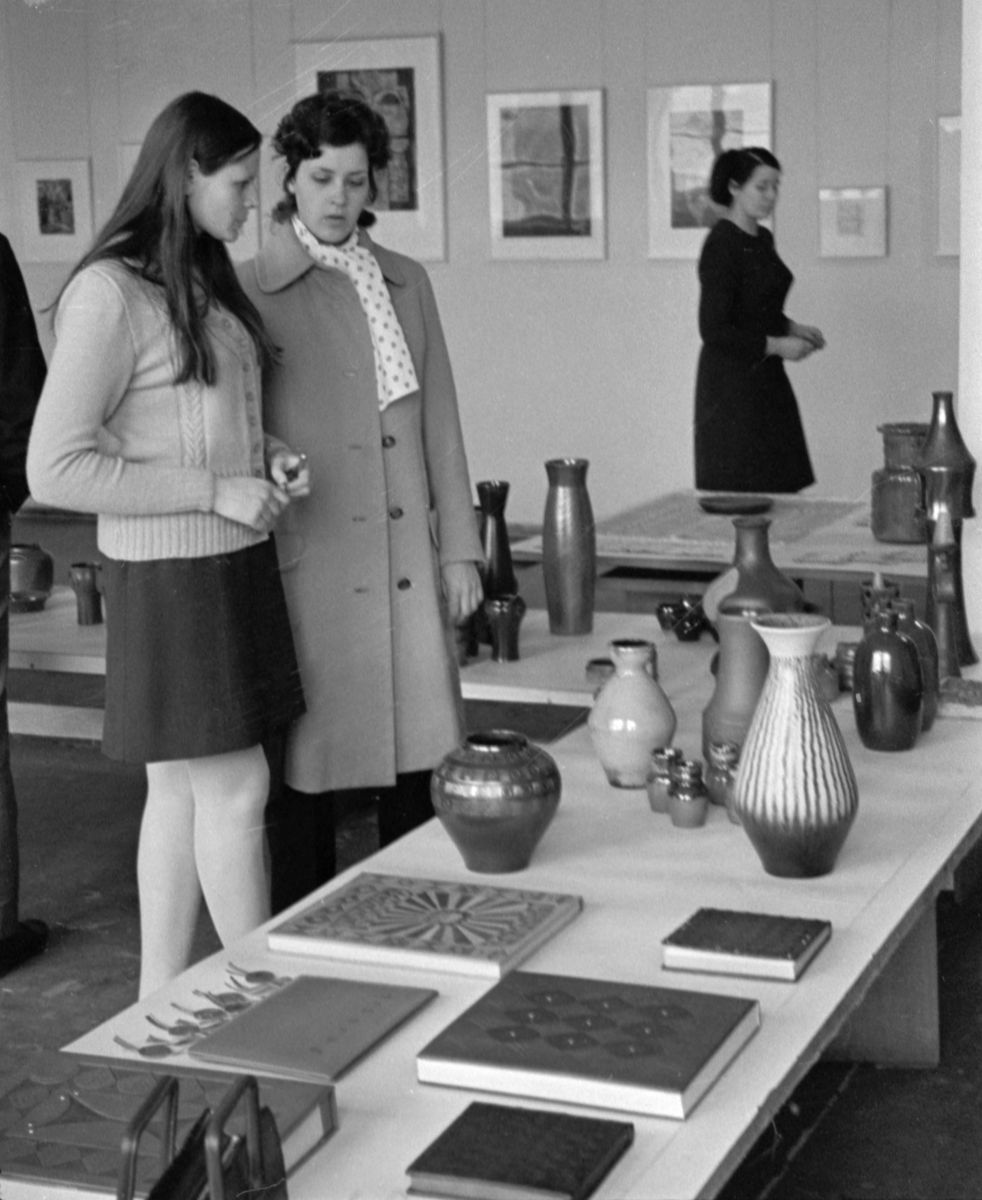
Open House Day at the Vilnius "Dailė" Art Production Factory, 1972, photo by K. Liubšys, LCVA, 0-054593. The centenary of the restoration Lithuania’s independence inspired a reflection on the history of Lithuanian modern design. In 2018, exhibitions were held not only in Lithuania but also in the neighbouring countries – Latvia and Estonia – accompanied by catalogues that reviewed design processes, highlighted the most prominent local design examples, and attempted to grasp the nature and dynamics of their development, as well as define their significance in the context of cultural history. One of the most important producers of design in soviet-era Lithuania was the Art Production Factories “Dailė”. Three “Dailė” main branch factories operated – in Kaunas (since 1945), and in Vilnius and Klaipėda (both independently from 1946). Such enterprises – art production factories – were only possible under the conditions of a totalitarian regime and a state-controlled economy. They were constructs created by the dominant ideology and political system. The “Dailė” Art Production Factories brought together artists from various disciplines. They developed and implemented public space art projects, designed decoration for festive events, instalation for exhibitions, museum displays, as well as interiors and exterior decorations for public buildings. This was also the setting where so-called industrial art – decorative and utilitarian objects – was developed and transformed. The aim of this dissertation is to determine the place, character and significance of the “Dailė” Art Production Factories’ production in the context of Lithuanian design history, emphasizing the institutional strategies shaped by Soviet ideology and supported by the control of the totalitarian regime. The dissertation analyses the specifics of Soviet design – artistically crafted objects for everyday life and environment, their aesthetics, and the mechanisms of their production and consumption. The period studied spans from 1945 to 1990. The first chapters address the prehistory of the factories, tracing back to the interwar period and examining the conditions that led to the founding of the “Dailė” Art Production Factories. The main analysis focuses on their operations from their establishment in 1945 until the declaration of independence in 1990, when the system began to disintegrate, losing both its ideological and economic foundations.
|
Jūratė Katinaitė (LMTA)23rd September 2025 „Opera Soloist in the Cultural Field of Soviet Lithuania: The Case of the State Academic Opera and Ballet Theatre“ Supervisor Prof. Dr. Rūta Stanevičiūtė-Kelmickienė
|
Deima Kristina Katinaitė-Zajančauskė (VDA)26th June 2025 „Strategies to Acculturate Nature in Western Art of the 19th–20th Centuries“ Supervisor Prof. Dr. Giedrė Mickūnaitė
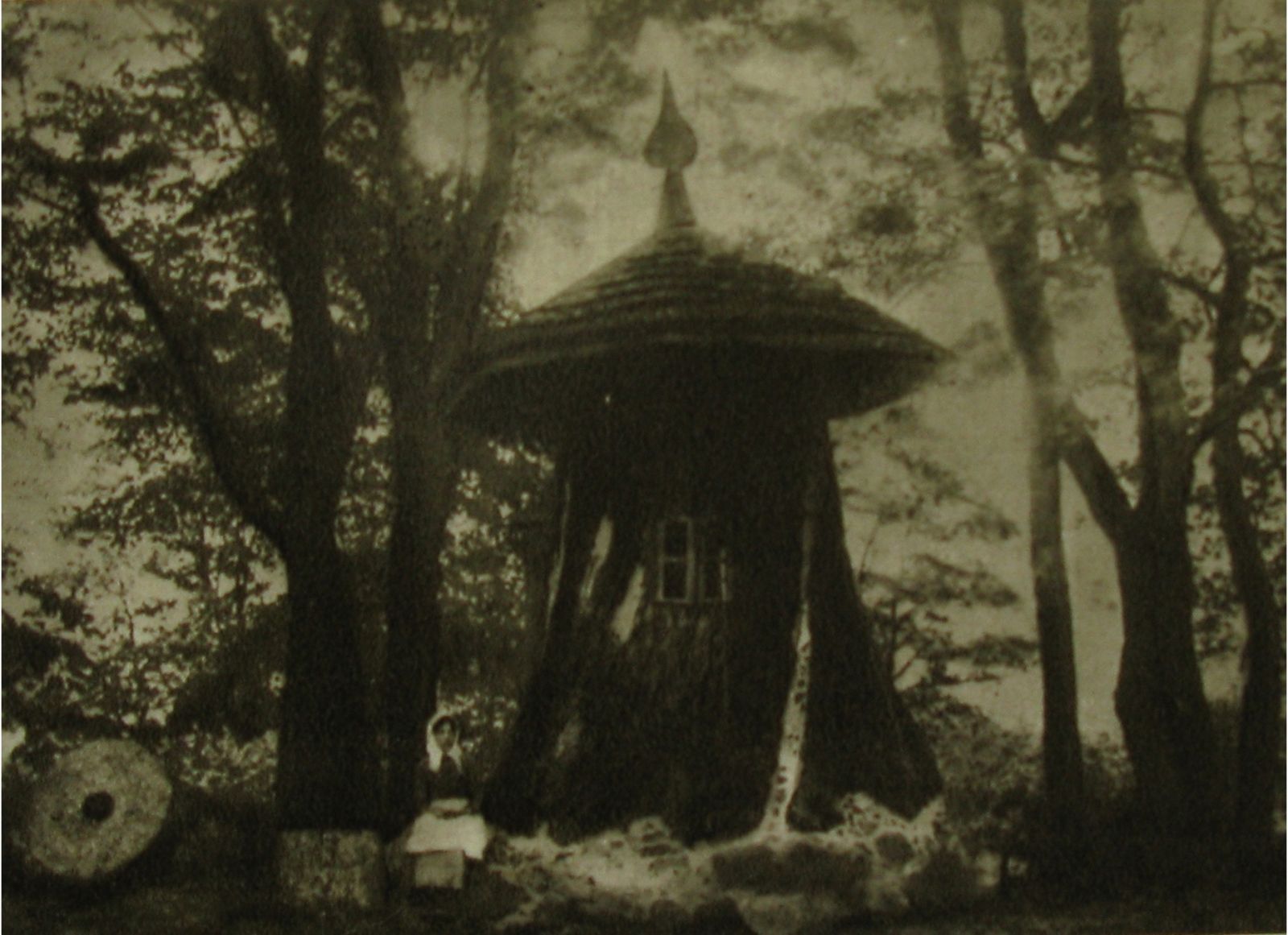
Dionizas Poška's Baublys, photograph from: Dionizas Poška, Raštai (Writings), Vilnius: State Fiction Publishing House, 1959, pp. 512-513. At what point, and by what means, did nature in art assume the role of a catalyst for sensory engagement and perceptual experience? What are the dynamics and conceptual transformations associated with this role in the context of Western art throughout the 19th and 20th centuries? These are the central questions underpinning this study, which explores the evolving artistic transformation of natural elements – particularly landscapes and, in certain instances, trees – within the framework of a modernising Western culture. The dissertation focuses on artistic practices wherein these natural forms are interpreted and mobilised as mediatory structures, intended to reveal or activate the experiential content of the perceiver. While the origins of experiential art are frequently traced to modernist movements such as Dada, the thesis advances a preceding genealogy: it contends that art began to consciously shape perceptual experience in the late 18th and early 19th centuries through aesthetic engagements with nature. This shift – from objecthood, which recedes, to experience, which becomes the essence of the object – can be traced to Romanticism, during which landscape painting increasingly sought to express the subjective experience of the perceiver. In the twentieth century, artists continued the Romantic trajectory of de-emphasising material objecthood, instead advancing a corporeal approach that facilitated direct and unmediated engagement with nature. Such practices enabled the viewer to participate in nature in the present tense, fostering unique, individual experiences not mediated by conventional forms of knowledge. Physical interaction with natural elements – emphasising change, ephemerality, and temporality – emerged as a defining mode of artistic practice. This critical reappraisal of the history of Western art from a naturalistic perspective is anchored in nuanced interpretations of material objects such as Dionizas Poška’s Baublys (1812) and Giuseppe Penone’s It Will Continue to Grow Except at That Point (1968). Baublys is a singular and, arguably, prophetic artefact that has yet to be fully addressed within an art historical context. It functions as a structure for the transmission of experience. Poška’s establishment of Baublys – a theatricalisation and aestheticisation of the inhabited world – represents a novel gesture of early 20th century cultural innovation: a strategy for the acculturation of nature that exhibits participatory features. It is a performative act embedded within the lived environment, preceding by several decades the so-called performative turn of the 1960s. While Baublys may not constitute a work of art in a formal or indigenous sense, its resonances with modern artistic practices are compelling. In the 19th century, Baublys operates as a contemporary object: it embodies an aesthetics of performativity characterised by threshold experiences that effect a transformation in the perceiver. In the 20th century, Giuseppe Penone engages sculptural form to reflect upon the world from the standpoint of both corporeality and consciousness. Through the identification of self with other via art, he attempts to perceive the environment from the perspective of the plant. In this gesture, the tree becomes simultaneously a mediator and a co-agent, culminating in an artistic object that stages the coexistence of human and non-human being. The dissertation proposes that, during the period under study, nature is translated into culture through three principal modes: by showing – adapting the landscape to align with the needs of the perceiver; by seeing – relating landscape to human experience; and by participating – engaging in situational, often physical interactions with nature, wherein the experience itself constitutes the content of the artwork. Dissertation
|
Birutė Kabašinskienė (VDA)20th June 2025 „The Iconography of St. Francis and St. Dominic in Franciscan and Dominican Art in Vilnius in the 16th-mid 19th Century: Expression of Features of Saints and Theological Ideas“ Supervisor Dr. Tojana Račiūnaitė
St. Francis and St. Dominic. A fragment of the fresco “Apotheosis of the Holy Spirit” on the dome of Vilnius Church of the Holy Spirit. Photographe Kęstutis Stoškus, Church Heritage Museum digital archive. The aim of the dissertation is to discuss how the features of saints and theological ideas that present sanctity are expressed in the iconography of St. Francis of Assisi (1181/1182–1226) and St. Dominic (1171/1173–1221) according to the examples of the 16th – mid 19th century artworks from Vilnius Franciscan and Dominican convents and churches. During the research, visual and textual material about these images was collected. The tendencies of presentation of both saints (significant in Vilnius) were discussed through the analysis of the genesis of their iconography: its formation in the 13th century and the emergence of the tradition of juxtaposition of St. Francis and St. Dominic. In the context of Franciscan and Dominican convents and churches in Vilnius, the influence of historical circumstances on the spread and change of the iconography of both saints was presented. Finally, the diversity of surviving images (or the ones captured in photographs and engravings; in total 65 out of 108 mentioned in the sources) was analysed on the basis of the hagiographic texts and earlier iconographic examples that influenced local Franciscan and Dominican art.
|

Mantė Valiūnaitė (LMTA)27th June 2024 "Hybridity in Cinema: Theoretical Concept, Film Festivals and Lithuanian Documentary Film Cases" Supervisor Assoc. Prof. Dr. Lina Kaminskaitė-Jančorienė Dissertation
|
Evelina Januškaitė (VDA)26th June 2024 "Volatile Mimesis: Experiencing an Alert Image in Contemporary Art" Supervisor Prof. Dr. Giedrė Mickūnaitė
Photo: The fragment of Dalia Truskaitė‘s artwork From Above. Exhibition “Suiten. Spaces of changing Perceptions”, 2023 The focus on perceiver‘s relationship to an image poses the question of the intersection of a surface and subjective gaze. An image needs an external medium to emerge before the perceiver; hence, the importance lies not only in what is being represented, but also in where the image settles down. Today, the actively displaying and gaze-mediating surface becomes a temporary medium of reality that fluid and impatient image demands for. Such image starts to be alert; moreover, it thickens, repeats, and multiplies reality, thus bringing the issue of mimesis back into the discourse of visual culture. The subject of this thesis is the dynamics of mimesis in contemporary art. The analysis begins with artworks employing physical mirror reflection, which is termed spontaneous mimesis; then discusses photography as a fixed reflection of reality, termed stabilized mimesis; continues by exploring the screens of contemporaneity – fluid mimesis; and finally concludes with an evaporating imprint of reality – volatile mimesis. The rhetoric of theoretical shift is formed in this sequence, and the fluctuation of mimesis is based on the interpretation of contemporary artworks where activating surfaces are employed. The thesis argues that the alert image, as a (non-)fixative medium, manifests itself in activating surfaces as one of the aspects of contemporaneity. In contemporary art, the alert image is an extreme expression of conceptually suppressed, yet experienced mimesis. Constant multiplication of perceived reality reinforces the experience of temporality and the ever-passing present. This dissertation offers a revised concept of mimesis, with changeability as its key feature. Such fluid and volatile mimesis circulates in contemporary art, where the alert image desires to find itself in the presence of the viewer. Dissertation
|
Vaida Ragėnaitė (VDA)20th June 2024 "Motives of Patriotism and Civic Resistance in the 19th Century Lithuanian Art: The Case of Kanuty Rusiecki" Supervisors: Assoc. Prof. Dr. Birutė Rūta Vitkauskienė (2017-2023), Prof. Dr. Helmutas Šabasevičius (2023-2024)
Kanuty Rusiecki. Reaper. 1844. Oil on canvas. 45x33. LNDM The hope to restore the former state – the Republic of Both Nations – persisted throughout the 19th century, fueling civil resistance in both Polish and Lithuanian societies. Efforts to regain independence escalated into the uprisings of 1794 led by Tadeusz Kościuszko, the 1830–1831 and 1863–1864 uprisings. These armed struggles did not liberate either Poland or Lithuania, but they fostered patriotism and unwavering resolve to regain freedom.As the repressive actions of the occupying powers intensified, the role of art only grew. Poems and paintings became weapons in the fight against the imperial policy of Russification. Vaida Ragėnaitė's dissertation highlights, through the case study of Kanuty Rusiecki, how artworks created after the suppression of the 1830–1831 uprising encoded secret symbolic meanings that represented the ideas of patriotism and civic resistance. Dissertation
|
Paulius Petraitis (LKTI)18th June 2024 "Intermediality and Networked Meaning-Making in Contemporary Baltic Art Photography" Supervisor Assoc. Prof. Dr. Odeta Žukauskienė
Vytautas Kumža, “Did I?”, 2022. Archival ink-jet print, door chain, screws, aluminum frame. 50x40cm This dissertation investigates the evolving realm of contemporary Baltic art photography, focusing on intermediality and networked meaning-making. The research, concentrated on the period 2013-2023, scrutinises the profound transformations within art photography influenced by digital and network technologies. It frames its exploration around the integration of photography with other media forms and the shifts in how photographic meanings are constructed and perceived in the interconnected, networked milieu. The study situates itself within the context of the digital transformation that has redefined the boundaries and functionalities of photography. It explores how contemporary photographic practices in Lithuania, Latvia, and Estonia navigate this new terrain. Tracing photography's journey from traditional roots to a networked image culture, it highlights the transition from classical to networked meaning-making paradigms. By contrasting contemporary frameworks with traditional modes of meaning-making, the dissertation highlights the role of algorithms and digital platforms in shaping how images are received and interpreted, underlining the complex interplay between technology and artistic expression in contemporary photography. The thesis aims to contribute to the fields of photography theory, art history and visual studies by shedding light on the nuanced dynamics of intermedial art practices and by broadening the understanding of how contemporary Baltic photographic artists engage with and contribute to global art discourses. Dissertation
|


Dainius Junevičius (LKTI)20th October 2023 "Lithuanian Photography in the 1850s–1880s (The Wet Collodion Period) and Its Social Determinants" Supervisor dr. Jolita Mulevičiūtė
Iliustration: P-5. Būrelis žmonių stebi akrobatą ant lyno. Tolumoje Žaliakalnis, kairėje kadro dalyje pastatas L. Sapiegos g. 3. Kaunas, apie 1878, J. Bžozovskio ateljė. Iš privačios kolekcijos. The dissertation analyses the wet collodion stage in the history of photography, which followed the daguerreotype era. During this phase, photographs could be reproduced in small quantities, though their high cost limited their accessibility to a select group of users. This constraint had implications for photographers’ commercial viability, as well as the potential dissemination, adaptation, and use of photographs, shaping the iconographic spectrum of images. The primary focus of this research centres on all photographs captured using the wet collodion method in Lithuania and their creators, as well as the social factors influencing photographers’ endeavours. This study adopts a perspective of social history, treating photography as an open, multifaceted contextual phenomenon encompassing both technological and social dimensions. The methodology incorporates comparative analysis and iconographic approaches, supported by an empirical and factual framework. Unexplored resources from other countries such as Poland, Belarus, Russia, and France were used in the work. This enabled the identification and publication of unique iconographic materials crucial to the history of photography and ethnography. Additionally, it contributed new written sources and visual documentation to the realm of scholarly knowledge. The three parts of the dissertation delve into the operations of photographic portrait studios during the wet collodion era, the determinants underpinning photography’s evolution within the context of governmental relations (legislative control over photographers, the deployment of photography for propagating imperial ideology in Lithuania, state commissions), and how photography responded to societal needs (photography’s role in regional knowledge, creation of Vilnius photo albums, deployment of photography for documenting economic and technological advancement). The dissertation includes the first comprehensive index of individuals actively engaged in photography during the wet collodion period. Dissertation
|
Ieva Blinstrubienė (VDA)28th September 2023 "Evolution of Spatial Structures of Vilnius Monasteries in the 14th Century and the First Half of the 18th Century Based on In situ Research Data" Supervisor Dr. (hp) Rūta Janonienė
Vilniaus Švč. Jėzaus Širdies bažnyčia ir Vizičių vienuolynas / J. Bułhak. Vilnius : J. Bulhako foto-atelje, [1912-1915]. Lietuvos mokslų akademijos Vrublevskių bibliotekos skaitmeninis archyvas. When delving into the architectural history of Vilnius, one frequently encounters the limited survival of visual references. The distinct material layers of urban structures are interpreted through studies focused on architectural characteristics. These studies, along with investigations into polychrome elements and archaeological findings, complement the often scarce details found in historical records. In certain instances, they even serve as the sole means of research. This study relies on data obtained from ongoing research, examines the evolution of spatial layouts within architectural monastery complexes. These complexes represent a significant typology of urban constructions that influenced the city's structure from their inception until the early 18th century. The research compiles and assesses analyses of the nature of monastic structures situated within Vilnius Old Town. Based on this examination, the study aims to identify patterns, similarities, and distinctions in the continuous transformation of these complexes. Dissertation
|


Jurij Dobriakov (VDA)21st December 2022 "The Development of the New Media Art Discourse in Lithuania in the 1990s–2010s" Supervisor doc. dr. Lolita Jablonskienė
Installation view of “Timestamps”, a Lithuanian media art retrospective (National Gallery of Art, Vilnius, 2021). Photo by Gintarė Grigėnaitė New media art, based on the intersection of art, science, and technology, as well as networked commons and sociopolitical activism, is a challenging object of art-critical analysis. This art field has a long and rich history, a broad network of institutions, initiatives and informal communities, yet it has historically had limited visibility in the institutionalised system of contemporary visual art and conventional art criticism. It can be argued that it is a parallel art world that exists in an isolated autonomous ecosystem, and is mostly reflected on within the latter. Due to this reason, new media art discourse has often lacked a more objective insight from the outside – the few art critics who commented on new media art phenomena encountered difficulties related to contextual vocabulary usage. In their turn, advocates of new media art, who pursued its legitimation, simultaneously sought to distance themselves from the supposedly hegemonic system of traditional art institutions and the art market, further deepening the discursive divide. In Lithuania, the result of this mutual misunderstanding or ignorance, coupled with the limited size of the new media movement itself, was that media art, which had briefly caught the attention of art experts in the late 1990s mostly due to its formal novelty, and became a phenomenon with a developed discourse relevant to a specific community, eventually failed to establish itself as a current, well-reflected practice synchronised with international processes, and remained essentially marginalised in the Lithuanian art history two decades later. The decline of the discourse was also influenced by the global factors of technological progress. New media art succesfully existed as an autonomous field when digital and network technology was not widespread, and artists had the privilege of exposing their invisible mechanisms to the broader public, acting as visionaries who heralded a more democratic and creative future. However, as this technology permeated all social strata and became routine, techno-utopian visions lost their currency, and were superseded by less straightforward renderings of technology’s impact delivered by post-digital art forms.
|
Marius Armonas (LKTI)23rd September 2022 "Contemporary Installation Art in Lithuania: Posthumanist Perspective" Supervisor dr. Erika Grigoravičienė
In the discourse of installation art, the viewer is traditionally regarded as a central figure and his or her participation as a key condition for the artwork. However, 2010s reflect a significant increase of interest in different materialities, including living organisms and digital technologies in art, along with the reflexive approach of the artists themselves to the relation between humans and nonhumans, culture and nature. This provides an opportunity to reconsider how and in collaboration with whom installation art gets to be created today; how it is received and experienced. For this reason, the theories of posthumanism are used as a methodological tool in order to critically reassess the anthropocentric worldview and question the positions of power that a human claims to hold. This research overviews the features, models and cases of installation art of the 2010s with the aims to enrich and rethink our understanding of installation. It is achieved by redistributing our attention among all the material objects of installation, thus considering a viewer as a mere component among all others. The artwork itself then, is as a collection of equally important elements with interacting materialities, rather than a set of passive objects orchestrated by the artist. The research proposes a hypothesis that installation artworks can be recognized as a prototype model for the theories of posthumanism, because they involve real encounters between humans, things, living organisms and technology. Installations are fostering us to inquire into being and knowledge of both, the Self and the nonhuman Other, and thereby are able to reconfigure this interrelation.
|
Narius Kairys (VDA)13th May 2022 "Between Ethnography and Fiction: The Films of Šarūnas Bartas and Aleksey Fedorchenko" Supervisor prof. dr. Nerijus Milerius
Shot from Šarūnas Bartas' film "Few of Us" Fearful of discrediting their scientific authority, anthropologists have long shunned what any film strives for, i.e., artfulness in the broadest sense. Eventually, with the realisation that many of the previous assumptions about scientific truth were questionable, the demand for ethnographic films to become more scientific or rebrand themselves as art lost its relevance. Moreover, while ethnographic film had long been associated with documentary practices, in the last few decades anthropologists have taken into consideration the ability of narrative and even fiction cinema to convey the symbolic structures and experiential knowledge of other cultures to the public. I argue that contemporary filmmakers, including Lithuanian film director, Šarūnas Bartas, and Russian filmmaker, Aleksey Fedorchenko, whose works examine an ethnographic subject, question the rigid distinction between art and ethnography and prompt us to rethink the definition of ethnographic film. To make my point, I analyse two of Bartas’s early films: Tofalaria (1986) and Few of Us (1996), and three Fedorchenko’s films: Shosho (2006), Silent Souls (2010), and Celestial Wives of the Meadow Mari (2012). The analysis of these films has shown the potential and limitations of diverse strategies in ethnographic filmmaking. This in turn creates premises for further discussion on a closer exchange between art and science and a different understanding of ethnographic film that does not rely solely on the documentary tradition and exclusively anthropologist-produced films.
|
.jpg)


Evelina Bukauskaitė (VDA)5th October 2021 "Jewish Artistic Life in Lithuania 1919–1940: Between Autonomy and Integrity" Supervisor Leading researcher, Dr. (hp) Laima Laučkaitė-Surgailienė
Fragment of the catalogue cover of the first group exhibition of Lithuanian Jewish Artists held in Kaunas in 1929, Kaunas University of Technology library The independent Republic of Lithuania, with Kaunas settled as the capital in 1919, rebuilt the foundations of modern Jewish, as well as Lithuanian, culture. In the newly formed state of Lithuania, the second largest community in the provisional capital was busy establishing its cultural life and searching for its identity. In the case of art, there was a correlation between the attempts to join the general artistic life of Lithuania and the satisfaction of the inner needs of the community. Lithuania‘s familiarity with Jewish art has been rather one-sided: what prevails is the analysis of Jewish artists‘ activity and creative work from the point of view of their integration into the general culture of the country. For this reason, the picture of interwar Lithuania‘s Jewish art and its contexts that has formed in Lithuanian art studies is incomplete, and many artists and artistic events have remained in the margins or completely unknown. This applies to the art and artists dedicated to the needs of the Jewish community, but also to the activities of local Jewish artists in other countries who left Lithuania. Jewish art life in Lithuania, as an individual and unique process that experienced ebbs and flows, adapted to political and historical realities, and absorbed and reflected a wide range of influences, was multifaceted and varied. Its trucated cognition does not allow us to see the overall picture as a whole, as a distinctive element of interwar Lithuanian cultural life. This kind of congition offers a new insight into the migration of artistic ideas and influences, art organisers and participants, and is important for the history of Jewish culture, but also for the general history of Lithuanian culture.
|
Eglė Bagušinskaitė (VDA)1st October 2021 "Manufacture of Furniture in Vilnius from the Second Half of the 19th Century to the Beginning of the 20th Century: Craft and Industry" Supervisor Dr. Dalia Klajumienė
Spinta, dekoruota liūtų galvomis, Nalšios muziejus, inv. Nr. IE-608, fot. E. Bagušinskaitė, 2019 m. Until now, there has been no detailed and consistent study in Lithuanian historiography analysing the activities and education of craftspeople who made furniture, their wares, and the origination and nature of local industrial furniture production. It is noteworthy that research on the history of interiors that focuses on furniture is still lacking. By using previous research on the socio-political and economic context, theoretical reconstructions based on archival sources, prosopography, attribution, and comparisons with other geographical locations, this text studies furniture production development in Vilnius from the second half of the 19th century through the early 20th century, distinguishing the segments of artisanal and industrial production. This study shows the interaction between craftspeople and emerging furniture production factories and how the co-existence of these two industries met different consumer needs. It complicates the well-established stereotypical notion that industrial production displaced craftspeople from the furniture production market. The study on furniture production is relevant in the context of Lithuanian historiography because it expands the knowledge about processes of the development and modernization of crafts in the second half of the 19th – early 20th century, the origin and spread of factory products, reveals the impact of economic and social changes, modernization on the production, and design of furniture.
|
Marius Daraškevičius (LKTI)30th June 2021 "Modernization of the Dining Rooms in Lithuanian Manors from the Mid-1700s to Early 1900s" Supervisor assoc. prof. dr. Rasa Butvilaitė
There are no studies on the historical development of manor houses’ interiors from the mid-1700s to early 1900s in Lithuanian art history that delve into the interior in terms of function, planned structure and form. The focus most often is on researching general features of manor architecture (building volumes, style development, estates’ spatial structure). Because of this, this doctoral thesis analyses the issue of manor interior modernization in a narrower perspective, concentrating on one space in manor houses of highest-level nobility: the dining room. The dissertation aims to reconstruct the structure and image of the dining space in the context of manors’ modernization processes from the mid-1700s to the early 1900s. The work investigates the causes of the emergence, prevalence and change of the dining room, the development of planning, form, structure, equipment and decor during that period. Object research complements the historiography of the development of the Lithuanian nobility’s culture. The methods of monads and clues and the social history of art were chosen to approach this micro-historical research, using historiographical and factual research methods and comparative analysis. The newly found data and the insights based on it provide a broader view of manor houses’ planning and decoration phenomena and aspects of the nobility’s lifestyle, cultural and social contacts. From the perspective of regional art and architecture history, the thesis is significant in that it covers the manors of the former Grand Duchy of Lithuania in Lithuania, Belarus and Poland, and ties them into an aggregate of common cultural tradition. In the Lithuanian art history framework, the research is important because it rethinks the processes of manor modernization in the context of Lithuanian historical and social development and broader European modernization processes. It also analyses their social, political, cultural settings and how the everyday home environment, in this case – the dining room, responded to them. This study is expected to be used as a practical aid for manor managers and heritage experts. |


Monika Krikštopaitytė20th November 2020 "Self-portrait and Self-portraiture in Lithuanian Art of the Late 20th and Early 21st Centuries" Supervisor prof. dr. (hp) Giedrė Jankevičiūtė
Photo: Konstantinas Bogdanas, Identifikacija. Tėvas ir sūnus, 2000, fragmentas, 22,5 x 18, fotografavo Gintautas Trimakas, aut. nuos. Today’s flows of visual information on social networks, the saturation of the media with spectacles, and the culture of selfies have changed the status of self-image and the ways in which it is interpreted. Not so long ago, the image of a person in photography was cherished as a rare and unique witness of the past, and when transferred to a work of art, was associated with privilege. This research has been stimulated by the desire to discover the elements and patterns which connect the diversity of today’s self-images with the phenomena of art and history, to discern possible approaches and to understand the course of development of the artist’s self-perception in the Lithuanian context. This research focuses on the embodiment of the artist’s self-image in the artwork, and the analysis of its forms and meanings. It adopts the view that a traditional self-portrait is a conscious and open choice of the author to present himself/herself. However, the structure of self-portrait also manifests itself in other types of works, where the problematic elements of self-portrait are important. This study examines the ways in which the authors of traditional and non-traditional self-portraits construct their image, what is it that determines the artist’s forms of self-perception and demonstration, and in what kinds of striking social and cultural circumstances the analysis of self-portraiture artworks can be identified. The thesis puts forward the hypothesis that the genre of self-portrait has changed in contemporary art: the image of the artist has become a manipulative formation which has become detached from the author’s need to establish a social identity, which dominated in self-portraits by Lithuanian artists in the 20th century, and has extended to a wider range of meanings. The aim of the study is to investigate, systematize and interpret the development of self-portrait and self-portraiture expression in late modernist and contemporary Lithuanian art, taking into account the shifts in the artist’s position in society and the development of self-image determined by his/her personal and social circumstances. Dissertation
|
Dainius Labeckis16th October 2020 "The Art of Gardens as a Space for the Manifestations of Romanticism: The Aesthetics of Lithuanian Manor Gardens and Parks at the End of the 18th Century and in the First Half of the 19th Century" Supervisor assoc. prof. dr. Rasa Butvilaitė
Manor gardens and parks, which are the focus of this work, were some of the most important spaces for the manifestation of Romanticism in the realisation of artistic ideas. At the end of the 18th century and in the first half of the 19th century, Romantic features appeared in various forms in the works of the contributors to the ideas about gardens in literature, architecture, horticulture, and visual arts. In the cultural environment of the Enlightenment and the Romantic era, a unique local tradition of Lithuanian parks was formed. This dissertation analyses the ways in which Romanticism informed and was reflected in the aesthetics of Lithuanian gardens and parks of the period, touching on related issues. The main aspects of the research problem are the origins of the phenomenon, its cultural and geographical coordinates, the local and European contexts that influenced it, and gardening trends in the period investigated. Moreover, this study also looks at the features that determined the singularity of individual parks, the combination of widespread and unparalleled characteristics in their layout, the symbolic meanings assigned to park spaces, and the relationship between art and nature in the aesthetics of a park. Based on various historical sources and research of the heritage of historical parks, this project concentrates primarily on parks that are better preserved or more fully documented, but material from other sites is also used as appropriate. This research project aims to re-energise the discussion around the importance of the Lithuanian garden art and to integrate the origins of the phenomenon into the broader cultural history, at least partially filling the gaps in historiography and indicating the directions of further research. Dissertation
|


Aistė Bimbirytė-Mackevičienė (LKTI)4th October 2019 "WESTERN EUROPEAN FINE ARTS IN LITHUANIAN COLLECTIONS IN THE 19TH CENTURY AND COUNT WŁADYSLAW TYSZKIEWICZ" Supervisor dr. (hp) Laima Surgailienė
Synthetic research of generalised nature on the emergence, content, prevailing trends and changes in taste in Lithuanian collections, especially those accumulated on the grounds of foreign fine arts, hardly exist in Lithuanian art history. Art collections are usually researched only from the perspective of patronage. This encouraged to choose the collections of Western European fine arts, in particular the collections of paintings, the circumstances of their emergence in Lithuanian manors in the 19th century and a specific case of the collection of Władyslaw Tyszkiewicz as the subject of the doctoral thesis. The aim of the doctoral thesis is to generalise the relation of the local aristocracy at that time to foreign art objects and assess Lithuanian collections in the context of Western European collecting on the grounds of the analysis of the content and circumstances of Western European art collections in Lithuania in the 19th century. The thesis reviews the change in the appreciation of the so called “Old Masters” (i.e. fine arts of 14th–18th centuries) in Western Europe during the 19th century, the content of the sets of works of fine arts of Western Europe which were present in Lithuania in the 19th century, as well as the libraries of private manors and published cultural texts. It reveals the incentives, influences and opportunities to acquire works abroad of Lithuanian collectors and conveys the development of collecting in Lithuania in the 19th – early 20th centuries and the circumstances that had an impact on it. The main objectives implied employment of a historiographic method. In addition, factographic research, comparative analysis and the methodology of social art history aimed at functioning of fine arts in society were also used. The method of case study was also employed to reveal the typicality of the phenomenon of collecting of Władyslaw Tyszkiewicz and the epilogue of colleting tradition in Lithuania. The thesis makes a significant contribution to Lithuanian historiography of collecting. The newly discovered data and insights made on them encourage a broader look at the phenomenon of collecting, personality of the collector, the reasons of his choices, contextual assessment of case studies as a part of a phenomenon that has become a characteristic feature of the era. Finally, this work contributes to the attempts to reduce the isolation of the culture of manors, which is often felt in the construction of Lithuanian identity. In addition to still existing image of the 19th-century Lithuania as an isolated country, the thesis encourages to look at another- i.e. European element of culture of that time. In this way the research actualizes the heritage of fine arts preserved in Lithuanian memory institutions and explains its existence.
|
Laura Petrauskaitė (LKTI)8th March 2019 "MATAS MENČINSKAS AND HIS CONTEMPORARIES: THE SIGNIFICANCE OF THE MIGRATION OF ARTISTS FOR THE MODERNIZATION OF LITHUANIAN ART IN THE FIRST PART OF THE TWENTIETH CENTURY" Supervisor prof. dr. (hp) Giedrė Jankevičiūtė
Photo: Matas Menčinskas prie savo kūrinių Buenos Airėse, apie 1930-1933. Fot. J. Pinkevičiaus. Lietuvos dailės muziejus, inv. nr. Fi-1627. The transatlantic migration of Lithuanian artists during the first part of the twentieth century and the interwar period is a phenomenon which remains unresearched on both, national and international, levels. This fact has motivated to question the impact of migration of artists and its significance for the modernization of Lithuanian art. The main subject of research is biography and work of sculptor Matas Menčinskas (1897–1942), whose creative years were divided between South America and Lithuania. The dissertation aims to study the transatlantic migration of Menčinskas and his contemporaries, its causes, purposes, directions, types, circumstances, history and results, and to reveal migration as a cultural and social phenomenon which was driven by, and at the same time contributed to the modernization of Lithuania. Analysis of the impact of migration on the consciousness, social status, professional identity and creativity of the artist is presented in this study. The interpretative field of Menčinskas artistic legacy is expanded. In the setting of a case study the general trends of the development of Lithuanian society and culture are revealed. This interdisciplinary study is conducted in a field which combines disciplines of art criticism, history and sociology. The main approaches for research include contextual biography, social art history, theory of cultural transfers, and discourse theory. This dissertation is important in the context of global art history as it allows to fill in the gaps of knowledge related to cultural links between Baltic States, and Lithuania in particular, and South America. This study is significant in the field of Lithuanian art history as it rethinks the narrative of art history constructed from the position of Eurocentrism, approaches non-Western countries as equal ‘other’, analyses their social, political and cultural context, and studies the process of integration of Lithuanian artist in this context. Dissertation |


Giedrius Gulbinas (VDA)20th December 2018 "THE CHANGE OF SOCIAL CRITICISM IN CONTEMPORARY ART IN LITHUANIA AT THE TURN OF THE 21ST CENTURY: IDEOLOGICAL AND EPISTEMOLOGICAL IMPLICATIONS" Supervisor assoc. prof. dr. Lolita Jablonskienė The dissertation examines change of critical paradigm in contemporary art in Lithuania from the end of the 80s to the beginning of the second decade of the 21st century and investigates political, social, economic and cultural factors which had an impact on the transformation of artists’ critical positions and artistic themes. Considering the social criticism of the second half of the 20th century as a critique based on progressive ideas that challenge status quo of the positivist thinking that shapes public life, it is possible to think of art practices based on similar intentions as a manifestation of social criticism. The transformations of social critique in contemporary art in Lithuania analysed in this dissertation are associated with the political and intellectual breaking points: the “Rebirth” period between the 1980s and the 1990s, the strife between conservative nationalists and liberals regarding the vision of society and culture’s evolution during the 1990s, and the epistemological transformation in Lithuania’s intellectual and cultural life which began in the late 1990s and is to be associated with the dissemination of Western critical social philosophy’s ideas of the latter half of the 20th century in Lithuania. The aspect of social criticism in contemporary art in Lithuania lacks systematically summarized approach in Lithuania, even though extensive attention to this aspect is given in Western art historiographies of the latter half of the 20th century. Considering this situation in research field of contemporary art in Lithuanian, this study may be one of the first attempts to systematically analyse socially critical artistic practices as a phenomenon and the circumstances that formed it. Dissertation
|
Aistė Dičkalnytė (VDA)14th December 2018 "THE FURNITURE MAKING IN LITHUANIA BETWEEN 1918 AND 1940: THE INTERACTION OF UNIQUE AND INDUSTRIAL DESIGN" Supervisor dr. Dalia Klajumienė
The photo is from the Šiauliai Aušra Museum, inv. No. ŠAM F-FN 10129 (available online HERE). Photo by Bronius Elsbergas furniture set for the Kaunas Pieno Center Palace. The researches of Lithuanian furniture making are fragmented and focused on the unique artistic design, its stylistic expression or the furniture is analyzed as the part of interior. It is impossible to see the whole picture from that point of view, because the industry which led to the modernization of the interiors, started flourishing at that time. All that encouraged to review the furniture making in Lithuania in the interwar period through the two different approaches - the unique and industrial design, pointing out their interaction. Vilnius region which is important because of the famous furniture makers and designers who lived and worked there, is also included in the research despite the fact that it was annexed by Poland at the interwar period. The complex research of furniture making in Vilnius between 1918-1940 was made for the first time. The aim of this dissertation is to investigate the Lithuanian furniture making development between 1918 and 1940, including unique and industrial furniture design, production and distribution. The stylistic development of the interwar period furniture is analyzed in this thesis. The innovations of furniture making in the private and public interiors are revealed by the examples of unique design. The prospects of the furniture makers education in the craft schools, the subject of the interior designing and decoration of SBU Faculty of Art in Vilnius, the activity of the most famous Lithuanian furniture factories, workshops and cooperatives is also included in this dissertation. The review of the most popular furniture models, their prices, tendencies of advertising them and the distribution in Lithuanian and foreign fairs and exhibitions are also involved. The catalog with the addresses and advertisements of furniture makers is added as a attachment. Dissertation
|
Karina Simonson (LKTI)30th November 2018 "BALTIC JEWISH PHOTOGRAPHERS IN THE REPUBLIC OF SOUTH AFRICA (1930–1976): LEON LEVSON AND ELI WEINBERG" Supervisor prof. dr. (hp) Aleksandra Aleksandravičiūtė
Photographer Eli Weinberg. Nelson Mandela and Winnie Madikizela Wedding in 1958. To this day the scope of professional art history studies related to 20th and 21st century African art processes from Lithuania is very limited. This very important gap needs addressing, especially in respect to the significant impact Baltic immigrants have made on contemporary South African culture. This dissertation is dedicated to the analysis of the legacy of first generation Jewish artist immigrants in the Republic of South Africa: Leon Levson (1883–1968) and Eli Weinberg (1908–1981). It examines photographic prints and negatives, biographical texts by both photographers, statements in the press, advertising material for exhibitions, reviews, oral history, and others in historical, cultural and socio-political contexts of South Africa. Most of the scientific studies published are related to the integration of non-European immigrants into Western culture. The novelty and the relevance of this interdisciplinary study, which combines Art History, Jewish Studies, and African Studies, is that it attempts to discuss a very important and seldom addressed issue – the integration of an Eastern European subject, who is a representative of Western visual culture, into a non-European culture. In order to answer this question the postcolonial framework must be adopted – insights, concepts and propositions from this framework will be deployed for an analysis of the work created in another culture. The main trends of anthropological, studio photography, social documentary and photojournalism noticeable in Levson’s and Weinberg’s artistic work, as well as impact of pictorialism are evaluated. This dissertation also raises cultural issues specific to South Africa, attempts to distil distinctive characteristics of Jewish photography in South Africa, asks if political processes of this nation, skin color and the social status of the artists has had an impact on their work, and if the work of Jewish photographers reflects on their memories of homeland. Dissertation
|


Ieva Mazūraitė-Novickienė (VDA)
26th October 2017
"THE PROBLEM OF MEDIA CONCEPT CHANGE IN SOVIET LITHUANIAN PHOTOGRAPHY"
Supervisor doc. dr. Agnė Narušytė

Algirdas Šeškus. Be pavadinimo, 1975, iš: Algirdas Šeškus. Meilės lyrika. 169 nuotraukos. 1975 –1983, Vilnius, 2011.
The aspect of change of media concept that occurred in soviet Lithuania is raised in the dissertation. The thesis focuses on the history of ideas in photography, and the change of artistic approach to the media. The study analyses, compares the photographic discourse in 1960s and in 1980s-1990s, and searches for parallels with the modern and postmodern photographic thought paradigms prevalent in the Western world. In order to understand the perception of photography at any given period and to find out the criteria used to define the artistic value thereof, research as well takes into account the assessors of the creative works of the time, namely - critics, experts, and the role of the addressee.
The dissertation provides the first systematic and consistent analysis of photographic concepts formed in Lithuanian in the second half of the 20th century and the reasons of change thereof. The thesis reveals previously unaddressed artistic problems such as self-reflection of photography, contradiction of theatricality and anti-theatricality. The thesis demonstrates significant changes of thinking that took place in the photography of Soviet Lithuania, discovers points of contact with the development of Western photographic theory and practise. The study explains the move of this media’s artists towards other visual art practices.
Dissertation
Jurgita Pačkauskienė (VDA)16th December 2016 "METAL TOMB CROSSES: A PHENOMENON - AN ARTICLE - A MONUMENT" Supervisor dr. Skirmantė Smilingytė-Žeimienė
The aim of the research: to unfold the theme of metal tomb crosses as a Lithuanian sociocultural phenomenon of early 19th century through to early 20th century. Dissertation |
Ūla Marija Tornau (VDA)15th December 2016 "OFFICIAL AND EVERYDAY SPATIAL NARRATIVES OF SOVIET VILNIUS: LUKISKES' ACADEMIC DISTRICT" Supervisor prof. dr. (hp) Giedrė Jankevičiūtė
The thesis continues the research on the history of Vilnius architecture adding new aspects and offering new interpretation possibilities. Research methods include micro-history, oral history and everyday history, which are not so far common in Lithuanian historiography of architecture. The multidimensional focus onto a defined territory allows to demonstrate contradictory aspects of the post-war Vilnius and to disclose the distinctiveness of the modern Soviet Lithuanian urban space. Research addresses post-war urban visions, both well known and less studied, and follows project implementation. The thesis provides the first detailed analysis of the LSSR Science Academy Complex project as well as subsequent alternative visions for the territory and then the actual spatial identities developed here during the first two post-war decades. Image: Jaunimo stadionas Vilniuje 1955 m., fotografas Ilja Fišeris, Fišerio archyvas Lietuvos dailės muziejuje. Dissertation |
Indrė Užuotaitė (VDA)21st October 2016 "THE MIRROR IN LITHUANIA FROM THE SEVENTEENTH TO THE EARLY TWENTIETH CENTURY – A SOURCE OF THE HISTORY OF CULTURE" Supervisor dr. Dalia Klajumienė
In Lithuanian historiography the mirror was presented as a glass artefact or an interior detail, while a more detailed and consistent research analysing the change of the shape, functions and value of the mirror has been lacking. In the present research it is established which social classes in Lithuania were the main users of mirrors, and which rooms of secular interiors were decorated with this extraordinary element, and why; presented the analysis of the most popular types of mirrors in Europe and their application in Lithuanian interiors; the ratio of imported to locally produced mirrors is revealed along with the persons, families and subjects involved in this activity. Image: iš grafui Stanislovu Kazimierui Kosakovskiui priklausiusio albumo Nr. 7. Vaitkuškis, 1895 m., ČDM FDS Ta 5196, fot. 19 (485) Dissertation |
Lijana Birškytė-Klimienė (LKTI)14th October 2016 "THE TITLE OF THE DISSERTATION: THE CULT AND IMAGES OF ST. ANNE IN CATHOLIC CHURCHES OF THE GRAND DUCHY OF LITHUANIA" Supervisor dr. Dalia Vasiliūnienė The research objects of the dissertation are the cult of St. Anne in the Catholicism of the Grand Duchy of Lithuania (further GDL) and its visual expression – the images of Saint Anne, their diversity in the church fine arts and Catholic environment. The cult of St. Anne and its expression in the GDL culture with reference to the representation tradition have not yet been researched. For the first time, the worship and iconography of St. Anne in Lithuania has been studied with the help of different disciplines, i.e. art history, the study of religions, the history of culture and archaeology. The dissertation aim is to reveal the peculiarities of the development of the cult of St. Anne in the GDL based on the written, printed and visual sources, to indicate the Catholic aspects of the relations between the representation of and devotion to St. Anne in the GDL religious culture. The work focuses on the disclosure of main historical features of the cult of St. Anne and its dynamics in various centuries, i.e. the ecclesiastical institutions and organisations that spread the cult are determined, the most popular forms of devotion are discussed, the iconographic types of St. Anne in the paintings and sculptures of Lithuanian churches are analysed. In the dissertation, the typology of the images of St. Anne in the GDL is formed, the dispersion degree of different iconographic types at various times is analysed based on the European experience and the Lithuanian legacy. Dissertation
|
Ieva Burbaitė (VDA)22nd April 2016 "ACTIVITIES AND CONTEXTS OF LITHUANIAN WOMEN ARTISTS' SOCIETY (1938-1940)" Supervisor prof. dr. (hp) Giedrė Jankevičiūtė
Establishment of the Lithuanian Women Artists’ Society in 1938 and the first collective exhibitions of women artists in Kaunas (1937, 1940) were fairly late phenomena. Questions arise why did women need to found a separate organisation when there was a successfully functioning Lithuanian Artists’ Union (established in 1935), featuring both men and women? What were the results of activities of the Lithuanian Women Artists’ Society? The thesis seeks to address these questions based on international context of women’s movement and by examining the state of local artistic life and women’s movement, as well as highlighting personal contributions of the most active members to the operation of the Lithuanian Women Artists’ Society. Basic theoretical approaches and methodology: the methodology of social art history, the case study method, historiographic research method, studies of historical sources. Dissertation |
 So far, no fundamental analysis on metal tomb crosses has been performed in Lithuania. A cross is the most typical shape of tombstone in Lithuania and metal crosses, i.e. crosses made of iron and cast iron, are a poorly researched but widely spread type of memorial monuments. A metal cross – signifying both the Christian culture and the memory of a person – can be both the work of a craftsman or artisan and also an industrially manufactured artistic item, a relic of the progress in metalworking industry, an important segment of the sepulchral heritage and a tangible source of the more and more modern Lithuania reflecting the religious, aesthetic and representational needs and financial capacity of the society.
 The dissertation focuses on Lukiskes’ District, a part of Vilnius’ centre, which gained special importance in the post-war city reconstruction plans. The study aims to trace the history of the architectural reconstruction of Lukiskes’ District and to disclose the discrepancy between the ideological and the real cityscapes which on the one hand led to the fragmented and hybrid urban character of this part of the city, and on the other hand allowed for the interpretation of the district as the polygon of the Soviet social utopia. This created a hybrid modernity of Soviet Vilnius whose features can be recognized in the city up to this day.
.jpg) This dissertation is the first scholarly work offering a comprehensive insight into the history of the mirror in Lithuania. Offering a reflection of the human body, mirror transformed its self-perception and formed daily habits and rituals. One could say that the evolution of the forms and constructions of the mirror made an impact on the design of the living space – it changed the forms and functions of furniture, and influenced interior lighting and planning. The aim of the dissertation is, referring to the analysis of written and iconographic sources and surviving historical mirrors, to present the mirror as a source of the history of culture of Lithuania from the 17th to early 20th century.
This dissertation is the first scholarly work offering a comprehensive insight into the history of the mirror in Lithuania. Offering a reflection of the human body, mirror transformed its self-perception and formed daily habits and rituals. One could say that the evolution of the forms and constructions of the mirror made an impact on the design of the living space – it changed the forms and functions of furniture, and influenced interior lighting and planning. The aim of the dissertation is, referring to the analysis of written and iconographic sources and surviving historical mirrors, to present the mirror as a source of the history of culture of Lithuania from the 17th to early 20th century. The subject of the thesis is the Lithuanian Women Artists’ Society (1938–1940) and its activity, which encompasses the society’s programme, implementation thereof via group activities and individual works of its members, as well as the results of such activities. The thesis also investigates what influence the society exerted upon creative works of its members and upon the public legitimation thereof. The objective of the research is to conduct a comprehensive analysis of premises for emergence of the Lithuanian Women Artists’ Society, its activities and local/international context.
Rasa Antanavičiūtė (VDA)18th December 2015 "SYMBOLS OF POLITICAL POWER IN VILNIUS PUBLIC SPACES IN 1895-1953" Supervisor prof. dr. (hp) Giedrė Jankevičiūtė
Dissertation |
Jolanta Bernotaitytė (VDA)12th November 2015 Supervisor dr. (hp) Laima Laučkaitė-Surgailienė "REPRESENTATION OF LITHUANIAN ART IN THE UNITED STATES IN THE 6TH-9TH DECADES OF THE 20TH CENTURY: ORGANIZATIONAL ASPECT"
Dissertation |
Julija Fomina (LKTI)9th October 2015 "CURATORSHIP OF ART EXHIBITIONS IN LITHUANIA: CONCEPTS AND EVOLUTION" Supervisor dr. (hp) Erika Grigoravičienė The dissertation focuses on the curatorship of art exhibitions, an important practice in the socio-cultural field which shapes the perception of art, institutes its meanings and creates its added value. The work examines the innovative ways of conceptualisation of art and dissemination of artistic ideas employed in the exhibitions produced by Lithuanian curators in 1988–2010, which have influenced the reception of art and partly formed the current notion of the evolution of Lithuanian visual art. A model of the development of concepts of curatorship in Lithuania between the end of the 1980s and the end of the 2000s was constructed on the basis of facts from the history of exhibition making and studies of the reception of exhibitions and their influence on field of art, with an emphasis on the precedents of creative exhibition making methods. The research is based on the methodological principles of exhibition history and the method of discourse analysis. These instruments make it possible to expose the multifaceted links between the mechanisms of production, presentation and public communication of art, and the artists, curators, institutions, audiences and critics involved in these processes. The constructed model of the evolution of the concepts of curatorship in Lithuania provides a historical perspective on the development of the Lithuanian visual art field over the last 20 years. It also reveals the trends of conceptualisation and representation of art through exhibitions, as well as important aspects of the functioning of art in society and its perception and evaluation. Dissertation
|
Alantė Valtaitė-Gagač (VDA)18th June 2015 "HISTORICAL CHANDELIERS IN LITHUANIA FROM THE 17TH CENTURY OF THE 1930s" Supervisor dr. Dalia Klajumienė
Dissertation |
%20Muravjovas%203_5_Muravjovo%20paminklo%20statymas_LDM.jpg) The history of political marking of the Vilnius city centre in the end of the 19th century – first half of the 20th century is reconstructed and analysed in the doctoral thesis. The research focuses on material markers (urban reorganizations of the city centre, construction of monuments and buildings of ideological significance), symbolic markers (competitions for projects of material markers, demonstration of national and / or state symbols, change of toponyms and functions of buildings, occasional texts) and rituals (mass events and their visual complements) realised or only designed by nine political regimes. The aim of the thesis is to analyse modern practices of symbolic marking which were based on political ideology and which were applied during the period of 1895–1953 in the public spaces of central Vilnius, and to disclose their causes, character and change. The research is based on theories of nationalism, memory and identity. Social art history is the methodology applied for examination of specific cases of political marking – political, social, cultural and economic context of their emergence is analysed, their target audience is identified, a relation of a commissioner and an executor is discussed. The method of comparative analysis is applied when juxtaposing the strategies of urban public space marking that were applied by different political regimes in the same space, i.e., Vilnius. The controversy around contemporary Vilnius commemoration signs encouraged to turn back to the beginnings of the development of modern political symbols in the city.
The history of political marking of the Vilnius city centre in the end of the 19th century – first half of the 20th century is reconstructed and analysed in the doctoral thesis. The research focuses on material markers (urban reorganizations of the city centre, construction of monuments and buildings of ideological significance), symbolic markers (competitions for projects of material markers, demonstration of national and / or state symbols, change of toponyms and functions of buildings, occasional texts) and rituals (mass events and their visual complements) realised or only designed by nine political regimes. The aim of the thesis is to analyse modern practices of symbolic marking which were based on political ideology and which were applied during the period of 1895–1953 in the public spaces of central Vilnius, and to disclose their causes, character and change. The research is based on theories of nationalism, memory and identity. Social art history is the methodology applied for examination of specific cases of political marking – political, social, cultural and economic context of their emergence is analysed, their target audience is identified, a relation of a commissioner and an executor is discussed. The method of comparative analysis is applied when juxtaposing the strategies of urban public space marking that were applied by different political regimes in the same space, i.e., Vilnius. The controversy around contemporary Vilnius commemoration signs encouraged to turn back to the beginnings of the development of modern political symbols in the city. The dissertation reveals representation of Lithuanian exile art in 6th–9th decades of the 20th century and presents Lithuanian art in the United States. This is the first complex analysis of exile art life throughout Lithuanian art history which explains the principles and trends of exile art, reveals the most important factors of exile art life – art organisations, institutions, expositional activities, patronage, and also discusses art functioning in the community and outside it. According to the analysis of exile attitude towards Lithuanian art representation, arrangement of exhibitions and their interception, and with the help of systematising numerous relevant material, dissertation reconstructs the overall view of Lithuanian art life and highlights the main dominants and their correlation in the art field. Research reveals the significance of Lithuanian art organisations and institutions for the development of exile art, it also discerns the main typical aspects for representation of Lithuanian art, and finally, discovers such facts of organisational art life poorly analysed thus far.
 The development and surviving examples of Lithuanian chandeliers have hardly received any research attention before. For the lack of all-inclusive and generalising research, the main problem of the dissertation is the reconstruction of the features of chandeliers, their place in historical interiors, their production and import in Lithuania and its historical territories. The main types of chandeliers developed in Europe and their production centres are presented. For the first time the author looks for manifestations of the functioning of chandeliers in different social contexts of Lithuania: the discovered references to chandeliers in the inventories of manors belonging to the nobles and the clergy, burgher’s homes, and descriptions of church chandeliers funded by patrons are analysed. The varying names of chandeliers in the written sources from the 17th to the 19th century are presented. Information of various nature found in documents is systemised: what types of chandeliers decorated residential, public and sacral buildings, from what materials they were manufactured, how many of them were hung on the premises and in what spots they were found. The thesis also reveals the value of the relatively recent chandeliers made during second half of the 19th century to the 1930s. The directions of their import in different political periods are traced. The surviving examples of chandeliers scattered in various repositories and locations have been collected and presented for the first time in The Catalogue of Surviving Chandeliers. The research has revealed the significance of chandeliers for the material culture of Lithuania. Not only the general cultural features, but also, in separate cases, the exceptionality of Lithuania in the context of the development of European chandeliers has been brought out.
Remigijus Venckus (VDA)28th November 2014 "JACQUES DERRIDA DECONSTRUCTION THEORY IN VIDEO ART ANALYSIS"
Dissertation |
Almantas Bružas (VDA)24th October 2014 "THE MEANING OF CONTEMPORARY ARCHITECTUAL LANDMARKS IMPORTANT FOR THE CITY IMAGE. THE CASE OF VILNIUS, KAUNAS, KLAIPĖDA" Supervisor prof. habil. dr. Nijolė Lukšionytė
Dissertation |
Lina Michelkevičė (VDA)20th June 2014 Supervisor dr. Skaidra Trilupaitytė "PARTICIPATORY PRACTICES IN LITHUANIAN CONTEMPORARY ART: THE PROBLEM OF CRITERIA FOR ANALYSIS AND EVALUATION"
Dissertation |
Monika Saukaitė (VDA)17th January 2014 "NARRATIVE STRATEGIES IN ŠARŪNAS SAUKA'S PAINTINGS" Supervisor assoc. prof. dr. Lolita Jablonskienė The dissertation explores the problem of visual narrativity. The object of the analysis are the works of the famous Lithuanian painter Šarūnas Sauka. Š. Sauka‘s paintings clearly seem to tell stories, although they are rarely based on any verbal stories that could serve as a source for interpretation. Instead, they are open to a wide range of individual interpretations: the viewers are provoked to narrativize the paintings by inventing stories that could explain the depicted scenes, which would otherwise remain mysterious and incomprehensible. But do the paintings themselves tell stories? Is it possible to trace narrativity in the very structure of the paintings? What concept of narrativity may be efficiently employed to analyze and understand visual texts? By what means Š. Sauka’s paintings are able to tell stories? The dissertation examines these questions by employing the French semiotics and narratology. The theoretic and methodological guidelines for the analysis of visual narrativity are formulated, linking it not only to the depiction of temporal sequences, but also to the implied transformations, to the laws of narrative grammar, and to the communication of the participants of the narrating act (the narrator and his addressee). In Š. Sauka’s paintings, the narrative strategies are elaborated by revealing the horizontal and the vertical dimensions of pictorial narrativity, as well as by examining the viewer’s and the narrator’s roles in the paintings. Dissertation
|
 Thesis based on the philosophy of Jacques Derrida, flexible segmented approaches to deconstruction are developed and applied to video art research in the thesis. In the first part of the research paper, the author analyzes the concepts of grammatology, phenomenological voice, self-present subject, spectres, etc.; distinguishes and considers the basic conceptions and describes possibilities of their application to the study of video art; introduces new words such as para-logos, beyond-logos, script-image, Reading-watching, etc. Derrida’s concepts are compared to each other in an innovative manner; for example, the concept of différance is dialectically linked to that of a specter (R. fantôme spectre), ontology is linked to hauntology (Fr. hauntologie). While transferring deconstruction into the research field of video art and expanding the application of Derrida’s concepts, the author does not evade the interdisciplinary, intervisual and similar issues with regard to video art, that are trending to cinema, fine arts and general visual culture. R. Venckus develops segmented deconstruction approaches and demonstrates their application in the second part of the thesis through the research into video art created by Aleksas Andriuškevičius, Gintaras Šeputis, Henrikas Gulbinas, Deimantas Narkevičius, Kristina Inčiūraitė and Audrius Mickevičius. The thesis is ended with consideration of the research results, evaluation of the segmented model of deconstruction, and conclusions.
 In global urban development, the construction of architectural landmarks is one of the most prominent contemporary phenomena, which has been widely observed and analysed for more than a decade. However, in urban areas, distinctive architectural objects are still often viewed through the prism of the half-century K. Lynch city perception theory. The key innovation proposed in the thesis is a construction of the research model that helps to explore the meaning of the contemporary architectural landmarks important for the city image. Methodological basis of the interdisciplinary research was the text analysis principles developed by R. Barthes, emphasizing meaningful level of an object. The theoretical aspects in the dissertation are in line with the practical ones. From 1990 to 2010, built in Vilnius, Kaunas and Klaipėda image forming contemporary architecture landmarks here were treated as a visual text. In total, 363 respondents of citizens and architects groups were interviewed in the survey and it led to the creation of the images of meaning, which consist of nine key values. The research model also reveals aesthetic, physical and some other features (exceptional location, distinctive function) of contemporary architectural landmarks, distinguishing them in the urban context. In order to process the data of the survey and to find the positive or negative correlation between the contemporary architectural landmarks’ values frequency and the distinguishing characteristics mathematical statistics methodological tools were used. It showed the differences of perception and helped to deepen the understanding the nature of contemporary architecture.
 The dissertation deals with problematic of those art practices, where an artist or a curator employs people as a project material so as to realise his/her creative purpose. Projects like this commonly expand beyond the aesthetic field: instead of representing social or political reality, they actually perform it. Therefore the dissertation aims at constructing a conceptual model that would enable to analyse problems around participatory art, as a practice operating both in aesthetic and social fields. The model is based primarily on rethinking of the classical divide between production and action (poiēsis and praxis) and the principle premise that contemporary production is increasingly becoming akin to action (Paolo Virno, Giorgio Agamben). The dissertation suggests that participatory practices are the clearest evidence of this dialectics between production and action in contemporary art. The model constructed of diverse philosophical concepts (idle talk, tactics, everyday practices, performativity, iteration) is employed for analysis of participatory art practices in Lithuania, which shows how looking through the prism of production and action foregrounds certain problems, general to participatory art (e.g. those of documentation, relation between art event and artwork, labour and entertainment, etc.). At the same time it proves to be a handy tool that helps to highlight specifics of a particular project, to question certain established prejudices, and unveil new aspects.
Miglė Lebednykaitė (VDA)21st June 2013 "FESTIVE APRONS IN THE LITHUANIAN CULTURE. 19TH CENTURY - EARLY 20TH CENTURY" Supervisor dr. Lijana Šatavičiūtė-Natalevičienė
Dissertation |
Juozapas Blažiūnas (VDA)21st June 2013 "THE HISTORY OF VILNIUS SACRAL EASEL PAINTING MANAGEMENT FROM THE SIXTEENTH CENTURY UNTIL 1939" Supervisor dr. (hp) Rūta Janonienė
The facts of painting management in the historical context that are presented in this dissertation reveal why these pieces of art were restored, how did the paintings change in the process of such work, what were the key factors behind choosing the pieces for restoration: was the choice based on the artist, or painting’s content, history, “heavenly origin”, “field of its miraculous influence” and respect – or just the condition of the piece. This creates favourable conditions to examine the paintings from a chosen aspect, i.e. to analyse the history of painting restoration in a specific environment, and to compare the results of the analysis with general tendencies in Vilnius church and monastery painting management. Due to the large volume of work, the novelty of the research and its nature, there was no intention to gather all the available data about the paintings renewed in the period under analysis, but to expose main phases of development and the shifts in the understanding of this management. Dissertation |
Ala Pihalskaya (VDA)20th June 2013 "FORMS OF EVERYDAY REPRESENTATION IN BELARUSIAN POSTERS 1966-1980"
The research is interdisciplinary in nature, since it is based on the anthropological and sociological interpretation of the everyday proposed by Michel de Certeau, while the analysis of visual representation is made according to the constructivist approach in visual studies developed by Stuart Hall, with elements of the semiotic analysis of the figurative and plastic levels of the visual message. The analytical model of the investigation of everyday life proposed by Michel de Certeau, which posits the simultaneous existence of oral and written paradigms that explain the logic of disparate everyday practices, make it possible to study Belarusian posters in the context of oral and written types of communication. The written paradigm actualizes cultural mechanisms that are structured according to "law", private property, the "conquest" of space and individualization, while the oral paradigm is focused on the repetition of the familiar. In a culture where the oral type of communication dominates, "law" and private property do not matter, whereas everything that can maintain the integrity of the collective as a unity is highly appreciated. The study shows that the figurative and plastic properties conform to the oral paradigm in Belarusian posters, and it is this that determines the specific logic of the choice of repetition of the same composition, the imitation of mechanized labour, the practices of copying typefaces. Dissertation |
 This doctoral dissertation analyses a part of the traditional folk costume – festive apron – which is presented not only as a garment, but also as a relatively independent and multidimensional cultural object, and a symbol of ethnic traditions and expressions of national identity. The research covers the period from the 19th century through the early 20th century. It is the first research systematically revealing the process of the apron losing its originally intended use and being given a new meaning in the first half of the 20th century, concurrently becoming a symbol and representative of national identity not only in Lithuania but also in foreign countries. The thesis analyses collections of festive aprons (including votive aprons) of the 19th century and the first half of the 20th century available in Lithuanian and foreign museums that have not been previously analysed on a systematic basis. Lithuanian festive aprons identified in foreign museums during the research are valuable supplementation not only to the holdings of these museums, but also to the fund of folk textiles of this type available in Lithuania. This provides an opportunity to assess the forms of artistic expression, the peculiarities of weaving techniques of, and the fabrics used for, festive aprons which, in their entirety, can be used as an important source for reconstructing traditional folk clothing and for studies of the national costume. The research actualises the aspects of socio-cultural expression of apron, enables better knowledge of their artistic form and can serve as an important source for comparative studies of Lithuanian folk art and further research of the Lithuanian culture.
  The dissertation starts with a general overview of painting restoration history in Western Europe, the analysis of the first known facts about care and maintenance of paintings in the Kingdom of Poland and Russia, and is followed by an analysis of management of sacral paintings those were located in Vilnius churches and monasteries or were a part of private collections, conducted in order to determine general historical regularities. Comprehensive research on paintings of Vilnius Bernardine Church and Monastery from the aspect of management history is a factor that reveals broader and more in-depth processes of the phenomenon under investigation.
 The aim of the dissertation Forms of Everyday Representation in Belarus posters 1966-1980 completed by Ala Pihalskaya, is to identify forms of representation of the everyday in Belarusian posters, when they were most actively produced on a mass scale in Belarus.