



The 16th international conference “Creativity & Culture 2025” has concluded its programme, leaving a significant mark of international cooperation. The Faculties of Vilnius University and Vilnius Academy of Arts in Kaunas successfully achieved their goals – this year’s event placed particular emphasis on intensive creative and academic exchange among researchers, artists, and cultural professionals from different countries. 
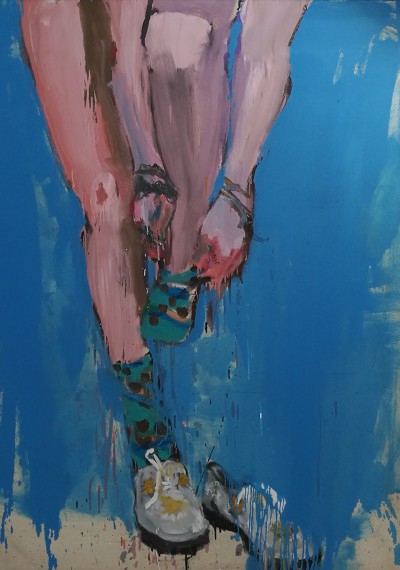
Throughout the conference, artistic and academic communities engaged in continuous dialogue and observed each other’s work. The authors of academic papers visited the Kaunas Faculty of the Vilnius Academy of Arts, where three international creative workshops were held for an entire week. They became acquainted with the processes of the drawing workshop “Drawing & Identity: Exploring the Self through Drawing”, led by Sarah Simblet (United Kingdom) and Donatas Inis; with the ideas developed in the textile workshop “Identity: Textile Narratives”, mentored by Ismini Samanidou (Greece, United Kingdom) and Monika Žaltauskaitė-Grašienė; and with the participants, artworks, and mentors of the painting workshop “Embodied Identity: painterly gestures and visual thinking”, led by Gideon Rubin (United Kingdom) and Petras Lincevičius. Representatives of the academic community communicated with the artists, listened to their reflections, and discussed themes of technology, materiality, the body, identity, and visual thinking. When asked about the workshop experience, international mentors shared their insights: 
“The energy of the artists gathered in the workshop was captivating – they found themselves in a new place, a new context, and fully immersed in the experience. I observed their process: joy turned into frustration, then into a search for inspiration, and finally a return to the creative path. They bravely embraced the full spectrum of emotions and created remarkable works.”
— Gideon Rubin on the challenges and joys experienced by participants of the painting workshop.
“We managed to create an environment where we could simply play, laugh, try things out, and not fear direction or outcome – it was a beautiful walk into the unknown. Creative work often happens individually and in solitude, but here we talked a lot and shared what we knew. I am taking from this process inspiration, warmth, and a sense of genuine human closeness.”
— Ismini Samanidou on the atmosphere of the textile workshop. 
“Drawing is universal – it does not depend on language. It is one of the most direct forms of expression, close to song and dance, almost an extension of them onto a surface. During the workshop, we explored the relationship between drawing, memory, and bodily senses – how certain smells or sounds awaken memories. The drawing process should not be constrained by rules or thoughts about right or wrong representation; the most important thing is to liberate the inner impulse to create.”
— Sarah Simblet on the search for identity and creative experimentation in the drawing workshop. .JPG)
On Friday, the workshop participants joined the conference’s plenary session and listened to keynote presentations. The plenary session was opened with welcoming remarks by Prof. Jonas Audėjaitis, Dean of the Kaunas Faculty of the Vilnius Academy of Arts; Prof. Dr. Giedrius Romeika, Dean of the Kaunas Faculty of Vilnius University; Dr. Marius Iršėnas, Vice-Rector for Art and Research at the Vilnius Academy of Arts; and Prof. Dr. Vilmantė Pakalniškienė, Vice-Rector for Organizational Development and Community Affairs at Vilnius University. 
The first keynote speaker, Dr. Cristina Farinha (Portugal), discussed global challenges in cultural policy and perspectives on sustainable partnerships. The second keynote, delivered by Dr. Arūnas Gelūnas, Director of the Lithuanian National Museum of Art, presented the latest developments and achievements in Lithuania’s cultural and artistic landscape. In the third keynote, artist Ismini Samanidou examined the future of textile art and its connections with contemporary technologies. This reciprocal exchange – scholars visiting the workshops and artists participating in academic discourse – became one of the defining features of this year’s conference. 
For the conference’s closing, both communities gathered at the festive Gala event held at Panemunė Castle. The evening opened with the official opening of the creative workshop exhibition and presentations of the works produced. After this key moment summarising the conference, guests were invited to a guided tour of the castle halls. The festive dinner in the Great Hall recreated the atmosphere of historical feasts, and the evening culminated in a baroque music concert performed by the ensemble Šviesotamsa, presenting the poetry of Maciej Kazimierz Sarbiewski in the context of 17th-century Italian music. (1).jpg)
Organised in collaboration between the Kaunas Faculties of Vilnius University and the Vilnius Academy of Arts, the conference demonstrated that this new form—merging theory and practice—is highly relevant in today’s context for understanding cultural transformations and creating future-oriented solutions. The event aimed not only to bring together professionals from different fields but also to foster profound intercultural dialogue, opening new pathways of thinking for both science and art. According to the organisers, the dialogues and collaborative initiatives that emerged throughout the week may serve as a foundation for a sustainable cultural future in the international arena.
Workshop Participants
Drawing & Identity: Exploring the Self through Drawing: 
Austė Skardžiuakitė-Kabašinskienė
Miglė Simatonytė
Aušrinė Klovaitė
Miglė Šaulytė
Rima Sodaitienė
Gabija Sodaitytė-Aldakauskienė
Nicolas Barrena
Alise Rudevica
Simona Milčiūtė
Identity: Textile Narratives: 
Zane Shumeiko
Ieva Krumina
Aet Ollisaar
Pamela Hardesty
Lina Jonikė
Renata Kazlauskienė
Embodied Identity: painterly gestures and visual thinking: 
Sarah Ghasemipour
Ida Brieghel
Tora Hesthammer
Jessica Hedin
Ana Beznea
Maeva Badaire
Alexander Bäckman
Karoline Ruusmaa
Jeppe Nymark
Stina Skulme
Nomeda Mackevičiūtė-Rysgaard
Benjaminas Ančeris